

André Herbst on turning sustainability goals into concrete action
Sustainability has long shaped how we think about our business and its future and has led to many initiatives over the years. At the same time, it is influenced by many moving parts: evolving regulations, changing customer expectations, new technologies and the realities of implementation. Given the broad scope of the term, our goal at Suedwolle Group is to turn these different demands into concrete, meaningful and measurable actions. The Future Impact Strategy provides the framework for this.
Our Sustainability Manager André Herbst shares his perspective on the decisions behind the strategy, the role of data and traceability, and why credible communication starts with being clear about both progress and limitations.

When we talk about measurable impact, where do you actually start?
Taking responsibility for our impact is something we consider an important part of how we do business. For us, it starts with understanding where we can make a difference and having the data to support that. From there, we looked closely at two sides: regulatory developments and the sustainability targets of our customers. Both helped us identify the areas that will be most relevant going forward.
But defining targets is not simply a matter of deciding where you want to be. Customer expectations, regulatory requirements, technical possibilities and commercial realities do not always move at the same pace. We first needed to build a solid data basis and understand what degree of improvement was realistically possible.
Our CO₂ target is a good example. By calculating our Corporate Carbon Footprint across our global locations, we could identify the main emission drivers and model reduction pathways based on tangible measures. This gave us a basis for setting targets that are ambitious, but also realistic and achievable.
Is having the right data becoming more important for the industry overall?
Absolutely. Traceability and product-related impact information are becoming increasingly relevant, particularly in light of developments such as the Ecodesign for Sustainable Products Regulation and the future Digital Product Passport. Our brand customers will rely on us as a supplier to provide the necessary data. In many cases, we are already working together to better understand what these requirements will mean in practice.
This is also why traceability is reflected in the goals of our Future Impact Strategy. At the same time, we need to remain flexible. Regulation is still evolving, and individual targets need to remain relevant as legislation and market conditions change.

Where does circularity fit into the picture?
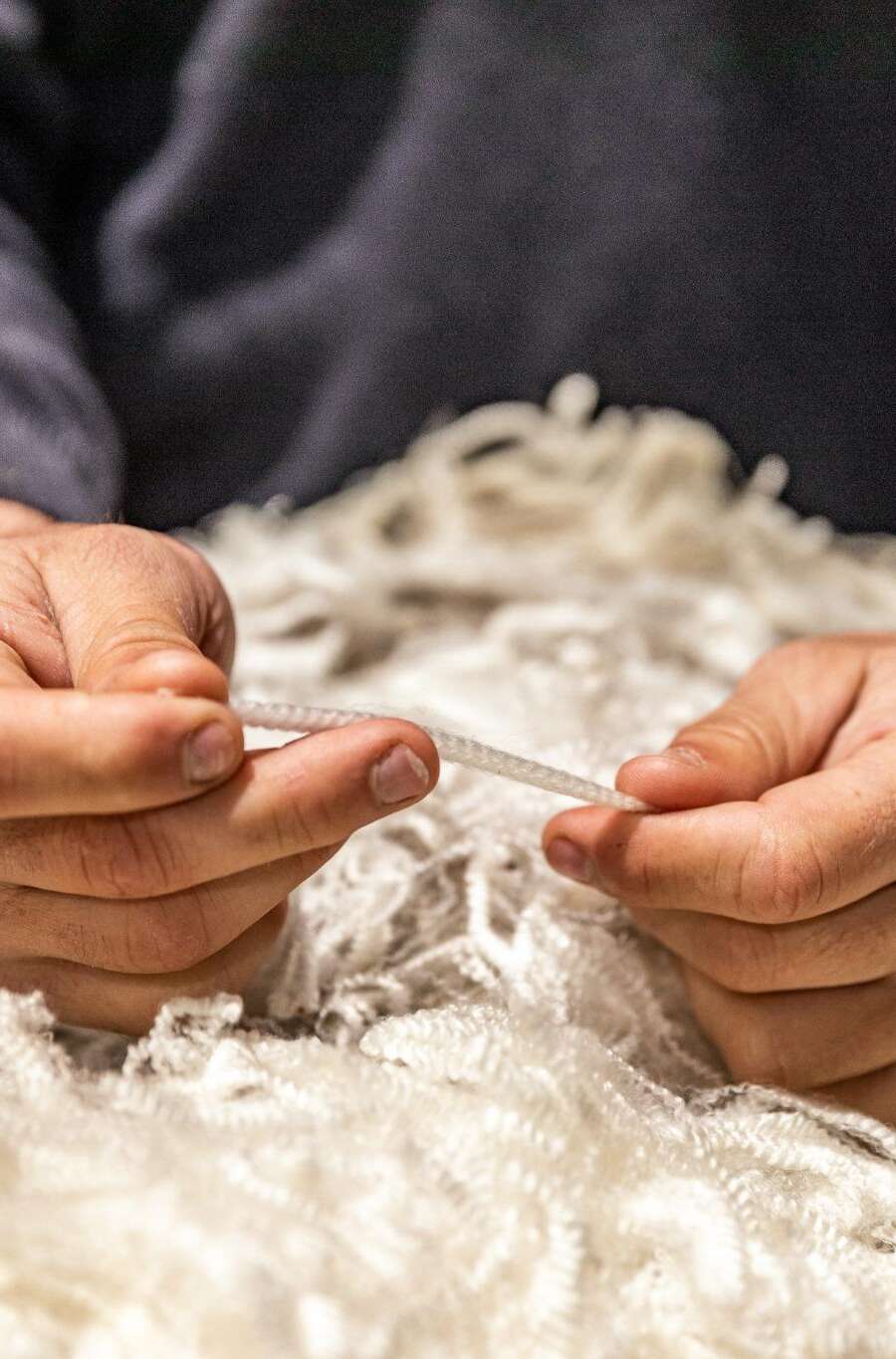
Circularity is a high-priority topic for us and for the wider industry. One of the major challenges is turning worn post-consumer garments back into high-quality products. Through our Karma project, we have already made significant progress, but there are still technical limitations. That is why we remain in close exchange with machine manufacturers and technical universities.
And technology is only one part of it. Collection and sorting systems also need to provide the quality of feedstock required to produce high-quality yarns. This cannot be solved by one company alone. We see our role primarily in advancing the processing technologies needed to use post-consumer garments as feedstock on a larger scale.
Does measuring impact also change how you communicate about it?
It should. Developing the strategy showed us how valuable constructive challenge can be. Colleagues from different functions questioned assumptions, tested claims and asked for stronger evidence. That made the process more demanding, but ultimately strengthened the quality and credibility of the strategy.
For me, credible communication means being clear about what we know, how we know it and what we are still working to understand. Not every impact can be measured with absolute certainty, and wording matters. An ambition is different from a commitment, and a commitment is different from an achievement.


What would meaningful progress look like to you?
Sustainability considerations are already part of how we think about the future of the business. The aim is to integrate them even more consistently into everyday decisions, including product development, sourcing, investments and customer engagement.
At the same time, progress has to become tangible: measurable reductions in our environmental footprint, stronger partnerships across the value chain and products that support our customers in pursuing their own sustainability goals. Ultimately, a positive impact will not come down to one target or one report, but to the decisions we make every day.